

Sales Bases
About Us
Sustainability
Sales Bases
About Us
Sustainability
NewsOthersApril 29, 2026
FujiClean Co., Ltd. was featured by NNA Philippines in coverage highlighting the company’s decentralized wastewater treatment initiative in Baguio City, the Philippines. The article introduced FujiClean’s efforts to address wastewater challenges in areas where conventional sewerage development is difficult due to topographical and infrastructure constraints.
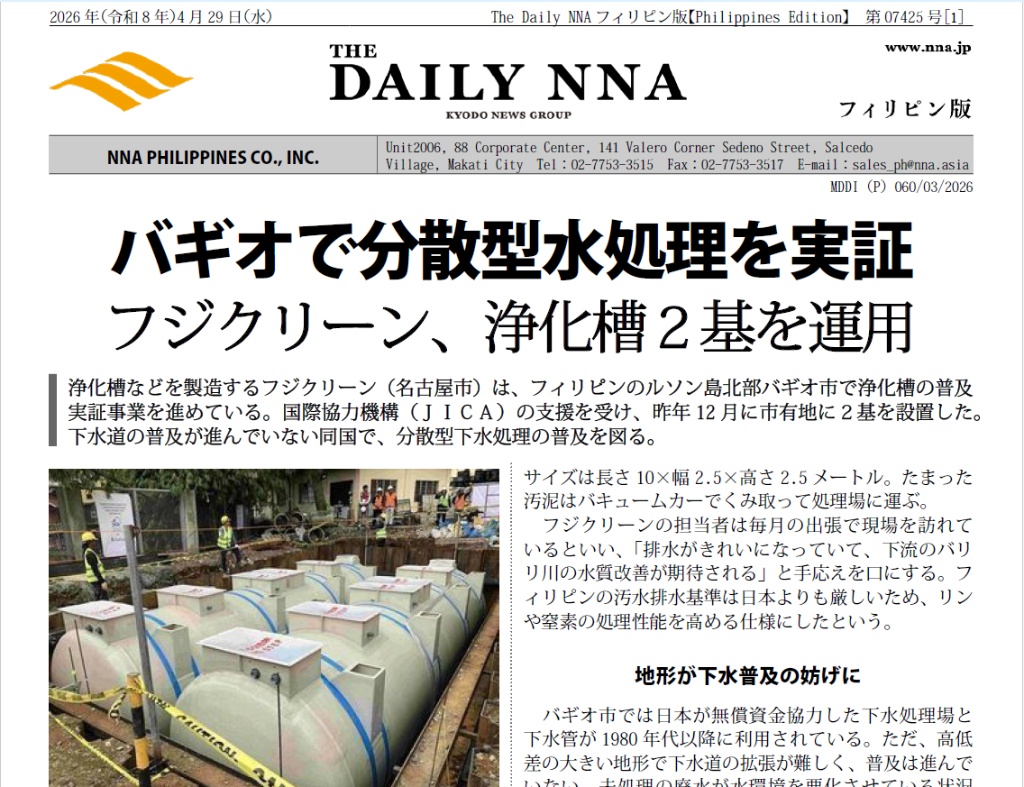
Article published in The Daily NNA Philippines Edition on April 29, 2026, featuring FujiClean’s decentralized wastewater treatment initiative in Baguio City.
The NNA Philippines article, titled “Demonstration of Decentralized Water Treatment in Baguio,” highlighted the need for practical wastewater solutions in Baguio City, where mountainous terrain can hinder the expansion of conventional sewer systems. The coverage also brought attention to the potential of decentralized wastewater treatment in supporting sanitation infrastructure development in the Philippines.
FujiClean has been working with JICA and Baguio City on an initiative concerning the effective and sustainable development of sewer infrastructure through decentralized wastewater treatment technology in the Philippines. The project includes checking the operational status of systems installed in Baguio City, analyzing water quality, and providing maintenance and management guidance for the local community.
Since November 2022, FujiClean has also promoted survey and verification activities related to compliance with the Philippines’ new effluent standards. Through these efforts, the company has advanced the concept of combining decentralized wastewater treatment systems with sewerage systems to help create more efficient and sustainable sanitation infrastructure.
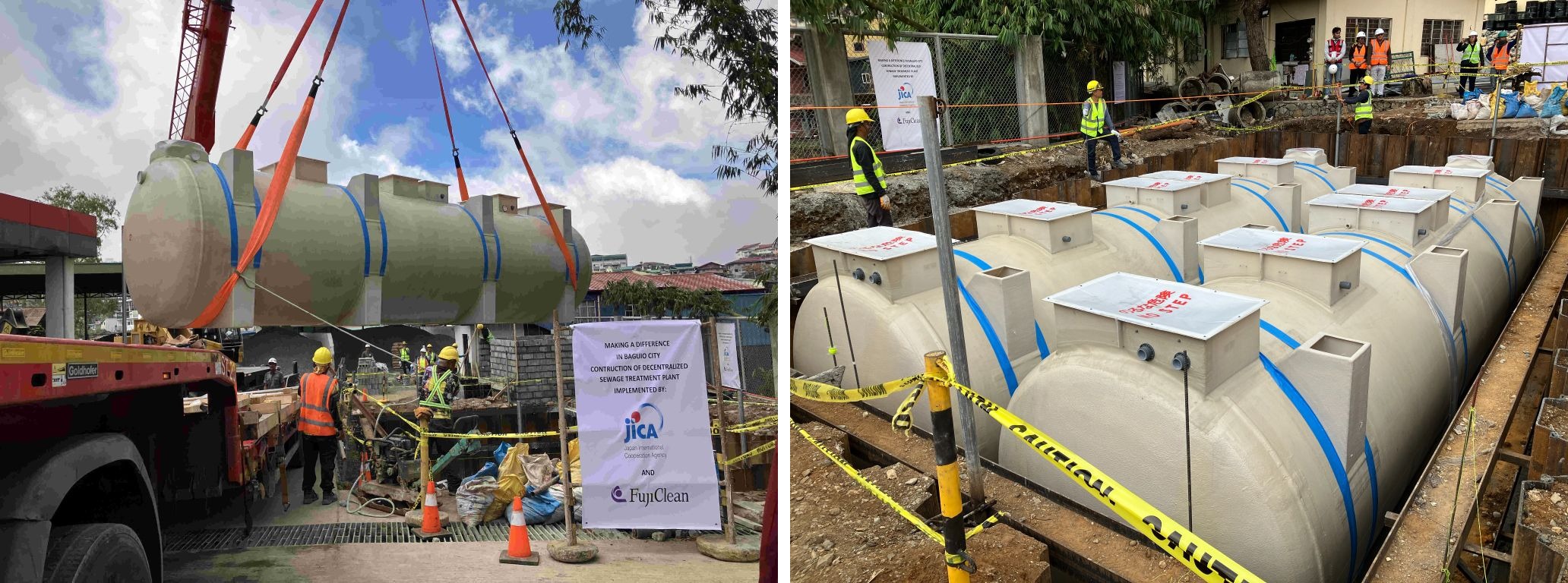
Wastewater treatment system installed at a project site in Baguio City, the Philippines.
FujiClean’s wastewater treatment systems are designed to treat domestic wastewater onsite, without relying solely on large-scale sewer networks. This makes them suitable for areas where geographical conditions, land constraints, or infrastructure limitations make centralized systems difficult to implement.
In the Philippines, this approach is expected to contribute to improved water quality, support compliance with new effluent standards, and help accelerate sanitation development in communities where conventional sewerage infrastructure alone may not be sufficient.
株式会社NNA
この記事は、アジア経済ビジネス情報を発信する株式会社NNAの許可を得て掲載しています。
This article is published with permission from NNA, Inc., a company that provides Asian business and economic information.
Founded in Japan in 1961, FujiClean develops onsite wastewater treatment technologies and manufactures wastewater treatment systems that utilize beneficial microorganisms. The company sells more than 50,000 systems annually, has installed more than 2,000,000 systems in Japan, and holds more than 40% of the Japanese market share.
FujiClean will continue to provide wastewater treatment solutions that contribute to a beautiful and safe water environment for future generations.